
Premium Islamic Gifts Worth Splurging On (2026): Seven Pieces That Earn the Extra Cost
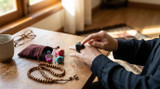
My mother kept the same tasbih in her top dresser drawer for eleven years before I understood what it actually was. Green stone, plain black string, chipped in one spot where it had clearly been dropped enough times that the color underneath had gone pale. I assumed it was old and cheap. It wasn't until I was around nineteen, going through her jewelry box looking for earrings to borrow, that she told me my father bought it for her in Makkah, on their honeymoon, and that she'd worn through three regular ones trying to make that particular one last.
Nobody warns you about the discomfort that comes with spending real money on something religious. There's a voice — quiet, but persistent — that says spending more on a gift than you'd spend on yourself is indulgent, maybe even wasteful, especially in a deen that leans so hard toward simplicity. Somewhere between humility and cheapness, the line gets blurry, and most of us default to safe. My father, apparently, didn't feel that hesitation. He knew she'd hold that thing daily for the rest of her life. That changes the math completely.
Some gifts are worth the extra zero on the price tag. Here are seven.
Why Spending More on an Islamic Gift Feels Harder Than It Should
Sunnah simplicity gets misread constantly. The Prophet ﷺ lived modestly — this is true, and worth remembering. But he also wore fine cloaks on Eid, gifted and received gold, and described loving good scent enough that it was said to have been made beloved to him. Simplicity in Islam was never about denying yourself quality. It was about not being owned by material things. Those are two very different ideas, and gift-giving culture in a lot of Muslim households has quietly collapsed them into one.
This shows up loudest around Eid and weddings, where the instinct is to go practical — socks, dates, a $15 tasbih off the mosque gift table — because anything more feels like showing off. Fair enough, sometimes. But there's a category of gift that isn't about showing off at all. It's about recognizing that a person, an occasion, or a relationship is significant enough to invest in something that will actually last — something they'll still be using, wearing, or looking at in fifteen years.
I've watched this play out at nearly every wedding shower I've been to. Someone brings a genuinely beautiful piece — real craftsmanship, clearly not from a dollar bin — and there's this half second of collective discomfort before everyone decides it's fine, actually, this is allowed. It shouldn't require that pause. A well-made gift isn't a statement about status. It's a statement about how much you paid attention to what the person actually needed.
That's the filter for this list. Not expensive for the sake of expensive. Expensive because it's made to be kept.
1. A Prayer Rug That Actually Justifies the Upgrade
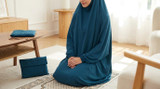
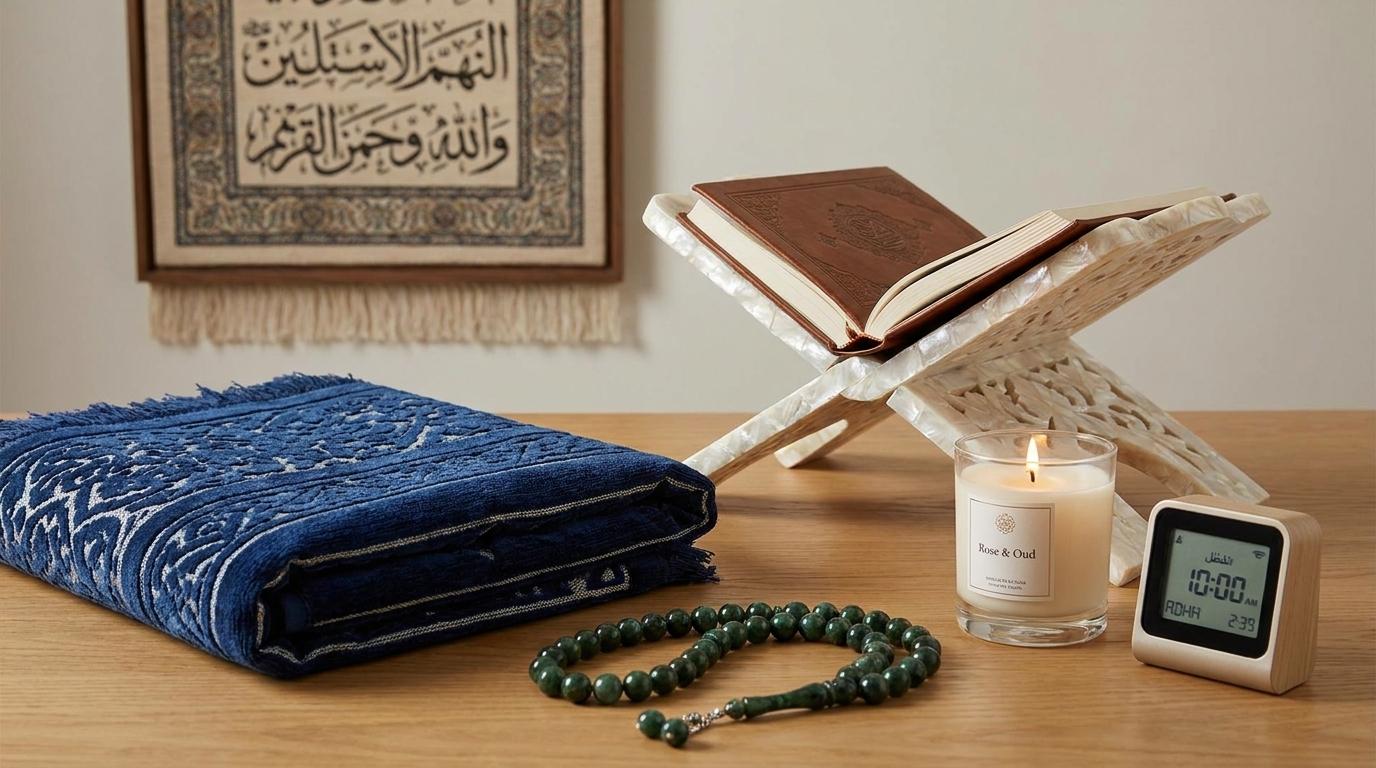
Most people's prayer rugs are thin enough that you feel the floor through them by the third rakah. Functional, replaceable, a little sad if you're honest about it. The Islamic Luxury Padded Sajjadah is built for people whose knees have started complaining after long Taraweeh nights — thick, cushioned, non-slip on both sides so it doesn't slide across hardwood mid-sujood. This one you notice. Salah on a rug like this feels less like something you're rushing through and more like something you're settling into.
Give it to a parent who's been standing on the same threadbare mat since the '90s. Watch them pretend they don't care.
Color matters more than people expect, too. The deep blue reads calm in low light and doesn't show wear the way lighter shades do after a year of daily sujood, which matters if this is going to live in a well-used corner of the house rather than a guest room that stays pristine because no one actually prays there.
2. The Necklace That's Actually Hand-Engraved, Not Stamped
Most “Ayatul Kursi jewelry” online is machine-pressed in bulk — fine, cheap, forgettable. The 18K Arabic Ayatul Kursi Necklace is different because it isn't stamped at all. It's hand-designed by a master calligraphy artist in Syria, the verse engraved with the kind of precision that makes people ask to look closer. It's the piece someone keeps near their heart — literally — and reaches for when they want a reminder of something bigger than their day. This is the gift for a daughter graduating, a wife on an anniversary, or, honestly, yourself, if nobody's gotten around to it yet.
3. Ayat al-Kursi on the Wall — the Woven Kind
There's printed wall art, and there's woven wall art, and the difference is obvious the moment you touch it. The Elegant Handmade Carpet-Wall Hanging with Ayat al Kursi is Egyptian-made and embroidered, not screen-printed onto canvas the way most budget pieces are. It carries actual texture — thread, not ink. Hung in a living room or a prayer corner, it becomes the thing people's eyes land on when they walk in, and if you believe, as I do, that the objects on your walls quietly shape your mood, it's the right kind of shaping.
4. Prayer Beads That Have Weight to Them
Cheap tasbih breaks. The string snaps, the plastic beads crack, and you're left with a handful of loose pieces in a drawer somewhere. The Natural Ruby Zoisite Tasbih is a different animal — genuine gemstone beads in deep green and black, silver-toned spacers, a proper tassel, available in 33, 45, 66, or 99 count depending on how someone actually counts their dhikr. You feel the difference in your hand immediately. It's heavier, cooler to the touch, the kind of object that ages well instead of wearing out.
This is the gift you give someone whose dhikr practice you actually know about. Not a stranger. Someone whose hands you've watched move through the beads before.
5. The Smell That Makes a Room Feel Expensive
Scent memory is its own category of gift, and it's underrated. The Rose & Oud Candle blends the classic floral warmth of rose with the deep, smoky richness of oud — poured into a 10oz glass jar with a bamboo lid, made with phthalate-free fragrance oils so the burn stays clean. It's not bakhour, and it isn't trying to be. It's that same Arabian warmth translated into something that fits a Western living room without needing charcoal or ventilation, which makes it the easier splurge for someone who wants the feeling without the ritual.
Light it before guests arrive on Eid. The room changes before anyone says a word.
6. A Quran Stand Worth Looking At
Most Quran stands are flat pieces of pressed wood that fold up and disappear into a closet. The Mother of Pearl Quran Stand is the opposite — a beech wood Rehal with intricate mother-of-pearl inlay in geometric and floral patterns, foldable X-shape for easy storage, but built to actually stay out. Say it plainly: a Quran left flat on a table stays closed. A Quran on a stand this beautiful gets opened, because it's already sitting there, already inviting you to sit down with it. That's not a small distinction.
7. The Clock That Pulls You Instead of Notifying You
An adhan on your phone is a notification you swipe away half-asleep. An adhan clock in the room is different — it fills the space, and you can't quite ignore it the same way. The Adhan Digital Prayer Clock runs the full five daily azan calls, keeps a global taqweem so it adjusts to your city automatically, and sits on a nightstand or kitchen counter like it belongs there. For a newlywed couple building their first prayer habits together as a household, or a busy family that keeps missing Asr in the shuffle of homework and dinner, this is the gift that actually changes behavior. Not many gifts can say that.
There's no ranking here, honestly. A $40 candle and a $300 necklace both qualify as a splurge depending on who's buying and who's receiving. What they share is the same quiet logic — they were chosen for a specific person doing a specific thing, not pulled off a shelf because the occasion demanded a gift and the clock was running out.
Who Are You Actually Buying This For?
A returning Hajji or Hajjah. Doesn't need celebratory. Needs reverent — something that matches the weight of what they just did. The tasbih or the necklace, not the candle.
A parent hitting a milestone. Retirement, an anniversary, twenty-five years of raising you specifically. Go for the prayer rug or the Quran stand — something they'll use every single day and think of you while doing it.
A newlywed household. They're building a home from nothing. The adhan clock and the wall hanging are the pieces that make a rental apartment start to feel like a Muslim home.
Yourself, finally. After years of buying everyone else's Eid gifts, buying your own good tasbih or your own real prayer rug isn't selfish. It's overdue.
The friend who has everything. Skip guessing. The candle is universal, dignified, and nobody's ever disappointed by it.
A Few Questions People Actually Ask
Is it okay to spend a lot on a gift in Islam?Yes, as long as it doesn't come from wasteful excess (israf) or debt you can't handle. The Prophet ﷺ gave and received valuable gifts himself. Intention and moderation matter more than the price tag.
What's the most meaningful expensive Islamic gift?Anything the person will actually use daily — a prayer rug, Quran stand, or tasbih beats decorative pieces almost every time, because use is what keeps the meaning alive.
Is gifting real gold Islamic jewelry okay?For women, yes — gold jewelry is fully permissible and a well-established gift tradition. For men, gold isn't permitted to wear, so silver or stainless steel pieces are the better route.
How much should I spend on an Eid or wedding gift?There's no fixed number. A good rule: spend what reflects the relationship without straining your own finances. A splurge that puts you in debt isn't generosity — it's a different problem entirely.
Does Madinah Mart ship to Puerto Rico?Yes — shipping covers the continental US and Puerto Rico.
Where These Actually Come From
Ordering anything Islamic used to mean overseas shipping, a tracking number crawling across an ocean for three weeks, and crossed fingers that customs didn't hold it hostage. Madinah Mart is US-based and ships across the US and Puerto Rico, and the selection is genuinely curated around Islamic tradition rather than being a general gift marketplace with an “Islamic” filter slapped on top. You're not digging through unrelated inventory to find the one good piece.
Coming Back to the Drawer
My mother's tasbih is still in that same drawer, last I checked, though it doesn't come out much anymore — her hands don't move the way they used to. A few years ago I asked her, half-joking, if she ever wanted a new one. She said no. Said the chip was the only part of it she actually liked, because it meant it had been used, not kept behind glass.
That's the whole argument for spending more, really. It doesn't have to be expensive to matter. It just has to be good enough that someone wears it down instead of putting it away.
Eid Mubarak, in advance or not. May whatever you give — expensive or not — be something they actually use until it shows.
Browse the full collection at Madinah Mart.