Essential Items Every Muslim Family Should Have at Home
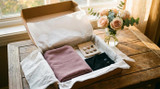
When I moved into my first apartment after getting married, my mother sent me home with a box. Not clothes, not kitchenware — a box of things she said "every house needs." A rolled-up prayer rug, a tasbih still in its plastic sleeve, a small wooden Quran stand she'd had since before I was born. I remember standing in an empty living room, no furniture yet, just this box on the floor, thinking: this is what she thinks a home actually is.
It took me a few years of living without those things — using a folded towel instead of a sajadah, keeping the Quran flat on a shelf where it stayed closed more than it opened — to understand what she meant. A house can have everything and still feel incomplete if it doesn't have the handful of objects that quietly organize a Muslim family's day. Not decoration. Structure.
Here's what I'd put in that box now, if I were the one packing it.
Why This List Looks Different Than You'd Think
Most "Islamic home essentials" articles are really gift guides wearing a different hat. They lean heavy on décor — calligraphy, framed verses, things you hang and forget. That's fine, and some of it belongs here too. But the objects that actually shape a Muslim household are the ones you touch daily, the ones that make ibadah easier instead of just prettier.
A prayer rug rolled in a corner, technically available, is not the same as a prayer rug that invites you to it. An adhan you dismiss as a phone notification is not the same as one that pulls you out of whatever you're doing. The difference is small. It also happens to be everything.
1. A Prayer Rug Worth Actually Praying On
Most homes have a sajadah somewhere. Thin, a little worn at the edges, the kind you unroll out of habit rather than any real feeling toward it. It does the job. It doesn't do much else.
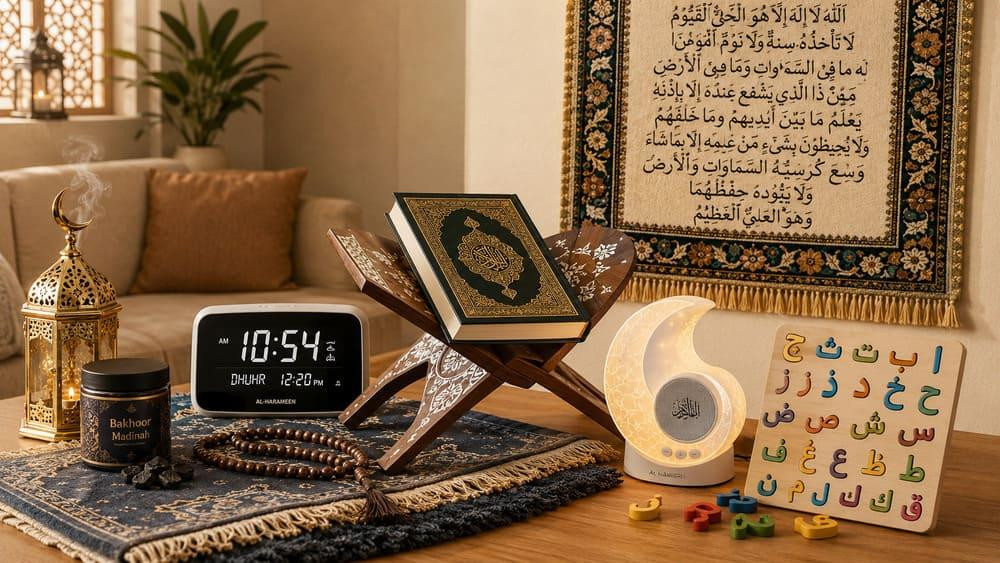
A genuinely good prayer rug changes the physical experience of salah — thicker pile under your knees during sujood, a weight to it that makes it feel less like a mat and more like a dedicated space. The Quilted Sajadah Muslim Prayer Rug is built with that in mind: padded, soft enough for daily use, sturdy enough that it doesn't flatten out after a month. Keep it somewhere it doesn't get rolled up and shoved in a closet. Somewhere it stays visible. Visible things get used.
2. A Tasbih That Actually Lives in Your Pocket
Dhikr is supposed to be constant, woven through the day, not confined to after-salah. In practice, that only happens if the tool for it is within reach. Counting on your fingers works. It also gets forgotten the second your hands are busy with anything else.
A handmade tasbih, the kind with real weight and a bead that sits comfortably between thumb and forefinger, tends to get carried — in a bag, a coat pocket, left on the kitchen counter where you pick it up while waiting for water to boil. The Madinah Handmade Tasbih collection has that kind of weight to it. Not decorative. Something you'd actually reach for.
3. An Adhan Clock — Especially for New Households
This one sounds unnecessary until you've lived without it. A phone alarm labeled "Dhuhr" is just another notification, sitting between a calendar reminder and a spam text. It doesn't carry any of the actual adhan's pull.
An adhan clock does something a phone can't: it plays the real call to prayer, out loud, at the actual time, in a way that's hard to ignore even when you're deep in something else. The Islam Adhan Alarm Clock Digital sets by city, switches automatically between the Hijri and Gregorian calendar, and gives five daily alarms with the full adhan rather than a chime. For a newly married couple setting up their first home, or a household with kids who are just learning the rhythm of the five prayers, it's less a gadget and more a fixture. It becomes part of how the house runs.
4. A Quran Stand That Keeps the Mushaf Open
There's a small but real difference between a Quran that lies flat on a table and one that sits upright on a stand. The flat one closes and stays closed — you have to make a decision to open it. The one on a stand is already halfway there. It stays out. It gets picked up more.
The Quran Holder/Stand, Beech Wood Inlaid with Mother of Pearl, is a foldable X-shaped rehal with pearl inlay worked into the wood in floral patterns — not printed, actually inlaid. Practical detail: the fold-flat design means it doesn't take up permanent shelf space if you don't want it to, but most families find, once it's out, it stays out.
5. Ayat al-Kursi on the Wall — the Woven Kind
Every practicing household seems to eventually put Ayat al-Kursi somewhere visible. It's the verse people default to, and there's a reason — the weight of it, the reminder it carries every time you walk past. The version that holds up over years, though, is the woven kind rather than a printed poster that fades and curls at the corners.
The Elegant Handmade Carpet Wall Hanging with Ayat al-Kursi is Egyptian-made, embroidered rather than printed, meant for a living room or a prayer corner where you'll actually look at it — not tucked into a hallway you pass through in three seconds. Put it somewhere you sit, not somewhere you walk.
6. Something That Makes Arabic Feel Like Play, Not Homework
If there are kids in the house, this is the one that matters more than people expect. Arabic letters can either arrive as a chore — flashcards, worksheets, a parent's patience running thin — or as something closer to a toy. The second version sticks.
The Montessori Educational Toys Arabic Letters Puzzle Block is a 3D wooden puzzle board built for exactly that — letters kids can physically place, remove, and mix up, aimed at ages 2 through 13, though honestly, a lot of adults end up fidgeting with it too. It's a small thing. It also does more for a child's relationship with Arabic than a worksheet ever will, because nobody resents a puzzle.
7. Something for the Air — Bakhour and a Proper Burner
This is the one people forget belongs on a list like this, and it shouldn't be forgotten. Scent does something memory can't quite explain — walk into a house that smells like bakhour and you know, before anyone says a word, what kind of home it is. It's Jumu'ah. It's a guest coming over. It's Eid morning before anyone's even awake yet.
A proper burner matters as much as the bakhour itself. The Golden Crescent Bakhoor Incense Burner has a crescent moon finial and cut-out patterns that let the fragrance diffuse slowly through a room instead of hitting all at once. Pair it with the Bakhoor Madinah chips — woody, musky, warm — and you've got the one sensory detail that, more than any object on this list, is the thing people actually remember about a home.
8. Tilawah Playing in the Background, Not Just on Occasion
There's a version of a Muslim household where the Quran only gets heard during Ramadan or when someone specifically sits down to recite. And there's another version — the kind my grandmother's house had — where tilawah is just part of the background noise of daily life. Playing while dinner gets made. Playing low while a baby falls asleep. Not a special occasion. Just the house.
You don't need much to get there. The 3D Moon Quran Speaker/Night Light does the job well — a small Bluetooth speaker shaped like a glowing crescent, with recitation from a rotating list of reciters built in, small enough to sit on a nightstand or a kitchen counter without taking over the room. Kids especially respond to it. There's something about a soft light and a familiar voice reciting that settles a room down faster than almost anything else on this list.
Who This List Is Really For
A newly married couple setting up their first home together — this is where an adhan clock and a real prayer rug matter most. You're building habits from nothing. Better to build them around good tools from day one.
A family with young kids — the Arabic puzzle board earns its place here, alongside a prayer rug durable enough to survive being climbed on, which, if you have small children, it will be.
Someone who grew up with all of this already in the house and just moved out — often the last to think about buying any of it, because it always just existed in a parent's house. Until it doesn't, and you're standing in your own empty living room with nothing.
Anyone hosting regularly — the bakhour and burner do more work here than anything else on the list. Guests notice a scented home before they notice anything on the walls.
A Few Questions People Actually Ask
Do I really need a dedicated Quran stand, or is a shelf fine? A shelf works, technically. A stand just makes the Quran more likely to actually get opened, since it's already sitting upright and visible instead of closed flat on a shelf.
Is an adhan clock worth it if I already get notifications on my phone? For a lot of families, yes — a phone notification is easy to dismiss without registering it. An adhan clock plays the actual call to prayer out loud, which is harder to tune out.
What's the difference between a regular prayer rug and a "quilted" one? Padding, mostly. A quilted sajadah has a layer of cushioning built in, which makes a real difference on hard floors during longer prayers or sujood.
Is bakhour appropriate for everyday use, or just special occasions? Both, honestly. Some families burn it only for Jumu'ah or guests; others make it a weekly habit. There's no rule against using it often — it's more a matter of preference and how strong you like the scent in your home.
What's a reasonable starting point if I can't get everything at once? A prayer rug and a tasbih first. They're the two things used daily, by everyone in the house, regardless of age.
Where to Actually Buy This Stuff
Ordering Islamic home goods used to mean overseas sellers, unpredictable shipping, and watching a tracking number crawl across an ocean for three weeks. Madinah Mart is US-based, ships across the US and Puerto Rico, and the selection is genuinely curated around Islamic tradition rather than being a general marketplace with an "Islamic" tag slapped onto a few random listings. You can browse the full Islamic gifts collection or see everything at once through all products.
Back to That Box
I still have my mother's box, or what's left of it. The tasbih wore through its string years ago and got replaced. The prayer rug got handed down to my own kid's corner of the living room, next to a much sturdier one now. But the Quran stand — that one's still exactly where she gave it to me, on a shelf that's moved apartments three times with me since.
I asked her once why she packed that particular box instead of, say, kitchen stuff, which would've been more obviously useful for a newlywed with an empty apartment. She said something I didn't fully get at the time: a house fills itself with furniture eventually, one way or another. It doesn't fill itself with the other things. Those, somebody has to think to bring.
She was right, and it took me longer than I'd like to admit to notice.
Browse the full collection at Madinah Mart.