Types of Prayer Beads: A Complete Tasbih Guide for Muslims
If you've ever held prayer beads during dhikr, you know that feeling. Your thumb moves from one bead to the next, and somehow it helps you sink deeper into remembrance of Allah. The world gets a little quieter.
Muslims have been using prayer beads for generations now. Some people call them tasbih, some others say misbaha. Actually, they are simply aids that assist you in recording the number of times you say a phrase like SubhanAllah or when you are reciting the 99 Names of Allah. Simple concept, but it makes a difference when you're trying to focus.
Walk into any Islamic shop, and you'll see dozens of varieties, from wooden ones that smell faintly of sandalwood to smooth gemstones that feel cool within your fingertips, and there are also those ornate Turkish designs with tassels. The options can actually be overwhelming if you don't know what you're looking for.
So,we decided to write this guide to clarify everything concerning prayer beads. We will explain what prayer beads are, tell you about different kinds you can find, discuss materials with you, and assist you in choosing the prayer bead that suits your practice the best.
What Are Prayer Beads?
Prayer beads are basically counting tools. That's it. They are usually in your hand when you are saying the dhikr phrases, and they assist you in counting the number of repetitions of what you have said.
In Arabic, they are known as tasbih (تسبيح), which is derived from the root word related to the glorification of Allah. Others may refer to them as misbaha (مسبحة), which is also derived from subhah (سبحة), meaning to praise.
Now here's where it gets interesting: The Prophet ﷺ is not reported to have used a string of beads; he and the companions are known to have counted on their fingers, and some early Muslims used things like date stones to keep count. There's a hadith where the Prophet told women to count their tasbih on their fingers because "they will be questioned and made to speak" (Sunan al-Tirmidhi 3583). That's still considered the better method by most scholars.
So, when did Muslim prayer beads show up? It seems that Muslim prayer beads became common some generations after the early companions, as dhikr gatherings and longer devotional practices spread. As people started doing longer dhikr sessions, keeping count on fingers got tricky. Beads solved that problem. Scholars like Imam al-Nawawi said they're fine to use because they help with worship, even if fingers are technically better.
Look, you don't need Islamic prayer beads to do dhikr correctly. Plenty of people never use them. But lots of Muslims find that holding something physical helps them concentrate. There's something about that rhythmic movement from one bead to the next.
Madinah Mart carries all kinds if you want to try one out. Wooden, gemstone, simple, ornate. Whatever feels right.
But why do these beads matter beyond just counting? That's what we need to talk about next.
The Spiritual Significance of Prayer Beads in Islam
Do you know that pattern of repeating SubhanAllah 33 times, followed by Alhamdulillah 33 times, and then by Allahu Akbar 33 times? It was the Prophet Muhammad (peace be upon him) who taught this very thing to his daughter, Fatimah.
The hadith mentions he told her to say these phrases before sleep, though he said 34 for the last one to make it 100 (Sahih al-Bukhari 5362).
Many people today use 33–33–33, even though the hadith mentions 34 for the last one to complete 100
Some Muslims go through the 99 Names of Allah instead. Either way works.
The truth is that trying to keep track in your mind becomes terribly confusing very quickly. If you were up to count 24 and, at the same time, thinking about what to have for dinner, then all of a sudden you wouldn't know whether you are at 24 or 29. Praying beads fix that problem. You just move to the next bead and keep going.
What's nice is how automatic it becomes. Your hand knows what to do, so your mind can actually focus on the meaning of what you're saying. That repetitive motion does something. It settles you.
But let's be clear: tasbih prayer beads aren't magic. They're just helpful. The actual spiritual work happens between you and Allah. Madinah Mart has decent options if you want to start using one.
So what kinds of prayer beads are even out there? More than you'd expect.
How Many Types of Prayer Beads Are There?
It's not a straightforward answer because people categorize them differently.
Most of the time, you're looking at two things. First is how many beads are on the strand. The standard is 33 beads, which gets you through one round of tasbih. Then there are 99 beads for a full set. Sometimes you'll run into those 1000-bead monsters, but those are for people doing extended dhikr sessions.
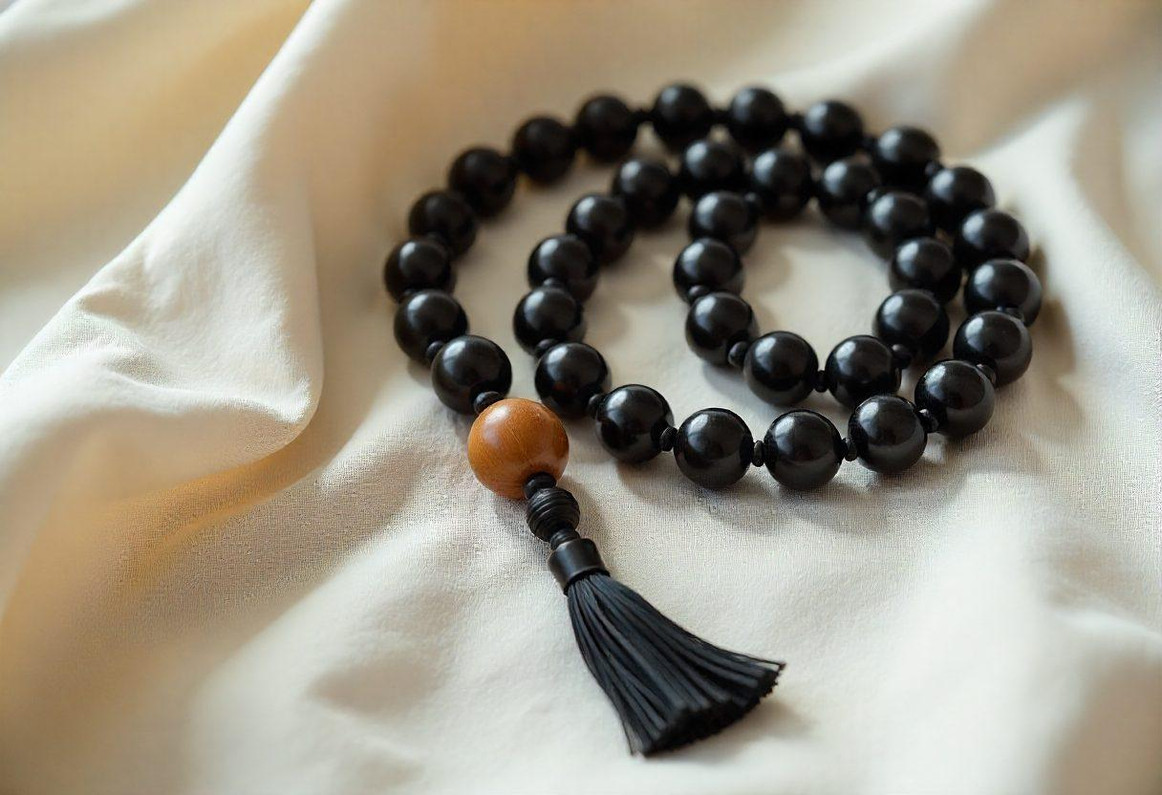
The other way to look at types of prayer beads is by what they're made from. Wood is traditional. Sandalwood, olive wood, that kind of thing. Then you've got stone options like black onyx or jade. Glass beads are popular in some places. And if someone's really investing, there's pearl or amber.
Where you are in the world matters too. Turkish beads have that teardrop shape. Middle Eastern ones are usually round and simple. South Asian versions tend to be chunkier with elaborate tassels. Walk into shops in different countries, and you'll see what I mean.
Which one should you get? Depends on what you need. Carrying it around all day? Get a 33-bead that fits in your pocket. Sitting down for serious prayer time? Maybe you want the weight of a 99-bead gemstone strand.
Let's start with bead count since that's usually what people pick first.
Types of Prayer Beads by Bead Count
33-Bead Tasbih
This is what most people start with. A 33-bead tasbih gets you through one complete cycle: 33 SubhanAllah, 33 Alhamdulillah, 33 Allahu Akbar. Done.
The size makes them practical. Before leaving the house, you can either put them in your pocket or just carry them in your bag. What if you are at the doctor's office, waiting for your turn, or stuck in heavy traffic? Absolutely, take out your beads and do a quick round of dhikr. Their size is so tiny that they do not take up any space and are not really noticeable to others that you are utilizing them.
If you travel a lot or just want something accessible throughout the day, compact 33-bead tasbihs like the ones in Madinah Mart's collection work perfectly. They're there when you need them without being bulky.
99-Bead Tasbih
Now we're talking about the full traditional strand. These Muslim prayer beads have 99 beads, which align with the 99 Names of Allah. You can also use them for three complete cycles of 33 if that's your practice.
A lot of 99-bead sets have divider beads placed after every 33 beads. Helps you know where you are without having to count. There's something more ceremonial about holding a full strand. They've got weight to them, both literally and in how they feel during prayer.
Most people keep these at home for dedicated prayer time. They're less about convenience and more about settling in for longer dhikr sessions. When you want to really sit with your remembrance, a 99-bead tasbih fits that intention.
1000-Bead Prayer Beads
You don't see these often. They're for people doing intensive dhikr, the kind where you're aiming for a thousand repetitions in one sitting.
Normally, these are set up in 100 groups with some kind of pointers, so that you don't get totally confused in tracing your position. Such things are pulled out by people during the month of Ramadan or at spiritual retreats when they are giving a lot of time to remembrance. It's a commitment just to sit there and complete the whole strand.
If you've got a 1000-bead set, you're probably pretty deep into your practice already.
Bead count is one way to categorize tasbih prayer beads. But the material they're made from changes the experience completely. Let's get into that next.
Types of Prayer Beads by Material
Wooden Prayer Beads
Wood is the classic choice. There's a reason you see it everywhere.
Sandalwood is the big one. Pick up a sandalwood tasbih, and you'll smell it right away. That scent stays for years, too, not just the first few weeks. Every time you pull them out for dhikr, it's there. Olive wood is popular if you want something tied to the Holy Land. Darker woods like ebony and rosewood look more formal.
What is great about wood is the way it seems so airy. I mean, you could probably carry these around with you for the whole day and still not realize that they are in your pocket. What's more, they get warm when you hold them; thus, it is definitely better than cold beads on a winter morning. And they last. My uncle's had the same wooden beads for twenty years.
Madinah Mart has sandalwood and olive wood options that are polished smooth. No rough spots to catch on your fingers. If you're new to this or just like natural stuff, start with wood.
Gemstone and Crystal Prayer Beads
Gemstones are what make a product really costly, but they are so beautiful. Black onyx, tiger eye, jade, turquoise, amber. Just look at any Islamic store, and most of the time, it is the gemstone beads that are visually attracting the customers with the way they reflect the light from behind the counter.
They're heavy compared to wood. You feel the weight of each bead. However, these items do not lose their cool at all, even if they are held for a long time. The metal is so shiny that it practically runs through your fingers. Different individuals claim that, for example, tiger eye helps with focus, while jade provides inner peace. Maybe, maybe not. Either way, they look incredible. However, this is more cultural than religious. In Islam, peace and focus ultimately come from sincere dhikr and reliance on Allah.
These are gift-level Islamic prayer beads. Someone completes Hajj, you get them gemstones. Big wedding coming up, same thing. They cost more than wooden ones, but you're buying something that'll outlive you.
Madinah Mart's gemstone collection has options if you want beauty that'll actually last.
Glass and Resin Prayer Beads
Glass beads are the affordable route. Turkish glass especially looks amazing with those color swirls inside. They're lighter than stone, won't stain like wood might, and you can find any color you want.
Resin works the same way. Modern material, tons of designs, and cheap enough that you can own several and switch them out. Some people like having different prayer beads for different moods. Glass and resin make that possible without spending hundreds.
Good starting point if you're not sure what you want yet. Test out a few cheap ones before dropping money on gemstones.
Precious Material Prayer Beads
Pearl, coral, amber, silver threading. These aren't everyday beads unless you're very careful or very wealthy.
People give these for massive life moments. Weddings, finishing Hajj, and converting to Islam. They're statement pieces. Pearl needs special care, or it dulls. Coral cracks if you drop it. But when someone hands you prayer beads made from precious materials, they're saying your spiritual practice matters enough to invest in properly.
You don't buy these casually. They're the beads you hope to pass down someday.
Material changes how your tasbih feels in your hand and fits into your daily life. But where the beads come from shapes how they look completely. Different parts of the world have their own styles.
Cultural and Regional Variations in Prayer Beads
Where your prayer beads come from shows in how they look.
- Turkish tasbih: One can easily recognize a Turkish tasbih. Those are the beads that look like teardrops and have beautiful tassels attached to the end. They are made for beautifying purposes and sometimes may be a little too elegant; however, that's the style there . Lots of detail work and color.
- Middle Eastern Muslim prayer beads go in the opposite direction. Round beads, simple design, nothing flashy. Classic look that's been around forever. If you picture traditional prayer beads in your head, you're probably thinking of this style.
- South Asian versions tend to be chunkier. Bigger beads, elaborate tassels, and sometimes decorative markers between sections. They make a statement.
- North Africa brings its own thing with unique materials and color choices you don't see as much elsewhere.
Lately, there's been this global fusion happening. Minimalist designs that strip everything down to basics. Modern takes that mix traditional elements with contemporary aesthetics. Depends on what appeals to you.
Here's the thing, though: none of this affects the spiritual value. A simple wooden tasbih from the Middle East works exactly the same as an ornate Turkish one. Style is personal preference, nothing more.
So how do you actually pick which prayer beads are right for you? Let's break that down.
How to Choose the Right Prayer Beads for You
Picking prayer beads isn't complicated, but a few things are worth thinking about.
Start with how you actually do dhikr:
- Are you doing quick sessions throughout the day? Get a 33-bead tasbih you can keep in your pocket.
- Sitting down for longer meditation? A 99-bead strand makes more sense.
Match the beads to your actual practice, not what you wish your practice looked like.
Portability matters:
- If you're always moving around. Travel a lot for work? Small wooden beads won't weigh down your bag.
- Mostly pray at home? You can go for heavier gemstone options without worrying about lugging them everywhere.
Material is personal.
- Some people love how wood warms up in their hands.
- Others want the cool weight of stone.
Hold a few different types if you can before buying. What feels right to you matters more than what's "supposed" to be best.
Budget is real:
- You can get decent wooden prayer beads for under twenty dollars.
- Gemstones might run you fifty to a couple of hundred, depending on the stone.
- If you're looking at pearl or amber, you're spending serious money.
Start where you can afford and upgrade later if you want.
If you're buying for someone else, pay attention to what they already use. Do they wear simple jewelry or ornate stuff? That usually translates to their tasbih preference too.
For beginners, go with a 33-bead wooden tasbih. Simple, affordable, does the job. Once you figure out what you like, you can always get fancier later. If you have been using prayer beads for a long time, perhaps it's time for something unique. Stones such as tiger eye or black onyx are lovely and strong enough to be used every day.
Whether you're drawn to sandalwood's earthy scent or the polished look of gemstones, Madinah Mart has a solid selection. They've got options across different price points and styles.
Once you've got your beads, keeping them in good shape becomes the next question.
Caring for Your Prayer Beads
Taking care of prayer beads isn't hard. Just don't be rough with them.
Wood is low-maintenance. Wipe them with a dry cloth if they get dirty. Make sure that you do not get them wet, as they will lose their shape. A few people put a small amount of olive oil on them from time to time; however, the majority of people do not.
Gemstones are tougher. You can wipe them down with a damp cloth. They handle everyday use without problems.
Glass and resin? Wash them with soap and water. Done.
Don't just throw your tasbih with other things in a drawer; keep it in a small bag. Some parts of the sun can fade certain materials, so it is better not to leave them on a windowsill. And wash your hands before using them. Just makes sense.
The string will eventually fray. When it does, take them to any Islamic shop, and they'll restring them for a few dollars. Or look up a tutorial and do it yourself.
A good tasbih sticks with you for years. Whether it's simple wood or fancy gemstones, find one that feels right. Madinah Mart has different options worth checking out if you're still looking.
Conclusion
Look, prayer beads are tools. Helpful ones, sure, but they're not doing the spiritual work for you. That's all on your intention and focus during dhikr.
What's nice is finding a tasbih that actually feels like yours. The one you reach for without thinking. Maybe it's cheap wooden beads that smell like sandalwood. Maybe it's polished onyx that your dad gave you. Doesn't really matter as long as it works for your practice.
There's no wrong choice here. Thirty-three beads or ninety-nine. Wood or gemstone. Turkish style or Middle Eastern. Pick what appeals to you and what you'll genuinely use. A fancy tasbih sitting in a drawer helps nobody.
The beads are there to support your remembrance of Allah. That's it. Find prayer beads that feel right in your hand and fit how you actually pray.
Ready to find your prayer companion? Check out Madinah Mart's collection. They've got handcrafted options from simple wooden tasbih to gemstone sets. Quality stuff that'll last.
FQAs
Are prayer beads required in Islam?
No. Prayer beads are absolutely not necessary. The Prophet Muhammad (peace be upon him) and his companions used their fingers for dhikr, and that is still regarded as the best way. Prayer beads were invented later as a convenient tool when people were doing longer sessions of dhikr.
What dhikr should I recite with my tasbih?
The most common pattern is of SubhanAllah 33 times, Alhamdulillah 33 times, and Allahu Akbar 33 times. Some people go through all 99 Names of Allah instead. Really, though, you can use prayer beads for any repeated remembrance. Seeking forgiveness, sending salawat on the Prophet, whatever fits your practice.
What's the difference between tasbih and misbaha?
Nothing, just regional language. Tasbih comes from the Arabic root meaning "to glorify." Misbaha traces back to subhah, which means "to praise." Different words for the same thing.
Can I gift prayer beads to someone?
Definitely. They make great gifts for Ramadan, Eid, when someone finishes Hajj, or converts to Islam. Any spiritual milestone, really. Just try to match the style to what the person would actually like and use.
How do I use 33-bead vs 99-bead prayer beads?
If you have 33 beads, you make one cycle and start over from the beginning if you continue. With 99 beads, you are able to say all of Allah's names once or three full cycles of 33 without starting again. Just depends on your intention for that session.
What material is best for beginners?
Start with wood. Sandalwood or olive wood, specifically. They're affordable, feel natural in your hand, and they're traditional. You're not dropping a lot of money while you figure out if you even like using beads. If a wooden tasbih works for you, maybe upgrade to gemstones later.
Do different colored beads have meanings in prayer beads?
Not really, no. Some cultures prefer certain colors, but that's aesthetic taste more than spiritual significance. Green is popular because of its association with Islam. Black looks formal. But honestly, pick colors that you find calming or beautiful. That's what matters.
Can women use prayer beads?
Of course. Prayer beads are for anyone doing dhikr. Men, women, it doesn't matter. If it helps you remember Allah, use it.


Recent Posts
-

-

Islamic Prayer Scarves & Hijabs: A Real Buying Guide
Feb 24th 2026 -