
Islamic Parenting: Building Faith at Home with Everyday Tools
You know what my daughter does now? She won't sleep unless we say her bedtime dua together. And honestly, I didn't teach her that through some formal lesson nor through forcing it!
One random Tuesday night when she had a bad dream, I held her close and we whispered it together. She calmed down. Felt safe. And now? It's our thing. That's when I realized—Islamic parenting isn't this big, scary responsibility where you have to get everything perfect. It's just... being there. In the mess. In the moment.
Can I be real with you? Most days I'm running on two hours of sleep and cold coffee. There's a mountain of laundry I've been avoiding for three days, my toddler just smeared yogurt on the couch, and I'm over here thinking, "How am I supposed to raise practicing Muslims when I can't even get them to brush their teeth without World War III?" But that's exactly my point about parenting Islam—it's not happening during some picture-perfect family Quran time with matching prayer mats. It happens when you say Bismillah before buckling their car seat. When you teach them to say sorry and mean it. When they see you make dua when you're stressed instead of yelling.
This article isn't about adding more to your plate. It's about seeing the Islam parenting that's already happening in your everyday chaos—and maybe adding a few simple tools that make it easier.
What is the Islamic way of parenting?
Before we talk prayer mats and Islamic books, let's get to the heart of it. What makes parenting in Islam different? It's not just what we teach, it's who we are when no one's watching. It's the spiritual foundation we're building our entire parenting on.
Parenting by Example – The Prophetic Model
Here's something that always gets me: the Prophet Muhammad ﷺ—the messenger chosen to deliver Allah's final message—would let his grandchildren climb on his back during prayer.
Picture that. He's in sujood, leading salah, and little Hassan and Hussain are using him as a jungle gym. Does he get annoyed? Nope. He extends his prostration so they can finish playing.
There's another hadith where he's racing with Aisha (may Allah be pleased with her). Racing. The Prophet ﷺ, laughing and running, letting her win sometimes. This is the same man who carried the weight of prophethood.
Why does this matter for Islamic parenting today? Because kids don't learn from your lectures. They learn from watching you exist. They're not memorizing your rules—they're absorbing your reactions. How you handle frustration. Whether you actually pray Fajr or just tell them to. If you speak kindly to the grocery store cashier or complain about them in the car afterward.
Your relationship with Allah directly shapes theirs. If they see you pray only when you're desperate, they'll learn that's when Allah matters. If they see you pray with consistency, even when you're tired, even when it's hard, they'll learn Allah matters always.
That's the prophetic model: be so patient, so playful, so human that your children feel safe bringing their whole selves to you. Because that's how they'll eventually bring their whole selves to Allah.
Building Love and Mercy as the Foundation of Discipline
Let me say something that might surprise you: discipline in Islamic parenting isn't about control. It's about connection.
"We have commanded people to honour their parents." (29:8).
We quote this verse to kids all the time, right? But here's what we forget that iit works both ways. If we expect goodness from our children, we owe them goodness first. Patience. Gentleness. Mercy.
The Prophet ﷺ said, "He is not of us who does not show mercy to our young ones." Jami` at-Tirmidhi 1919
Not "He is not of us who doesn't enforce rules" or "doesn't make them memorize the Quran by age five." Mercy. To our young ones.
So what does this look like practically? It means when your toddler has a meltdown at the masjid, your first response isn't shame or anger—it's understanding. It means boundaries, yes, but delivered with warmth. It means correcting behavior without crushing spirit.
Islamic parenting taught me this: correction should never compromise connection. Discipline and affection aren't opposites. They work together. You can say "That behavior isn't okay" while still communicating "You are always okay with me."
Takeaway: Islamic parenting prioritizes the heart before behavior, relationship before rules. Because a child who feels deeply loved and securely connected will want to follow your guidance—not out of fear, but out of trust.
Bringing Islamic Parenting into Everyday Life
The beauty of parenting in Islam is that every moment holds potential for teaching faith. Here's how to weave Islam into your family's daily rhythm.
Morning Routines – Starting the Day With Intention
It's a universal parent thing that mornings can be chaotic, but even in the rush, there's room for Allah. When your child's eyes flutter open, whisper "Alhamdulillah" together—thanking Allah for a new day. It doesn't have to be perfect. Some mornings my kids mumble it half-asleep, and that's okay.
Making wudu together is one of my favorite parts of the day. Splashing water, giggling a bit, while explaining why we wash before talking to Allah. A cute wudu guide stuck on the bathroom mirror or a small prayer mat waiting in the corner makes it feel special, not like a chore. And breakfast? That "Bismillah" before the first bite plants something beautiful—the understanding that even toast with jam begins with gratitude. Islamic parenting lives in these unremarkable mornings, not in perfection.
Turning Daily Habits into Acts of Worship
I used to think teaching Islam meant formal lessons. Then I realized, it's in the snack reaching, the shoe tying, the doorway entering. When your toddler grabs a cracker, gently remind them: "Bismillah first, sweetie." Right hand for eating. It feels small, but these become muscle memory.
We started a thing at dinner—everyone shares something they're grateful for. The kids love it. Sometimes it's "my toy car," sometimes "that Baba came home early." A plate with Bismillah written on it or a placemat with gratitude prompts helps when they forget. Even putting on shoes—right foot first—becomes a mini lesson. Islamic parenting isn't about adding more to your day. It's about seeing what's already there through the lens of faith.
Teaching Faith Through Family Interaction
Your kids aren't just listening to what you say—they're watching what you do. When the cashier gives you extra change and you go back? They notice. When you promised ice cream and you're exhausted but you still go? They remember. That's Islamic parenting in action.
And when you mess up—because we all do—let them see you recover. "Mama got frustrated and raised her voice. That wasn't right. Astaghfirullah. I'm asking Allah to help me do better." That's powerful. Bedtime is when the magic happens, though. Dim lights, soft voices, reciting duas together. A bedtime dua book or a story about Prophet Musa (AS) turns tucking in into something sacred. It's these small, repeated moments that stick with them forever.
Takeaway: Small, consistent acts create lifelong habits of faith.
Making Learning Fun – Islamic Education at Home
Let me tell you something I learned the hard way: forcing Islamic education never works. But making it fun? That changes everything. Here's how to make that happen at home.
Islamic Storybooks and Arabic Learning Tools
Kids don't need lectures about patience—they need to hear about Prophet Ayub (AS) and how he never gave up. Stories stick where sermons don't. An illustrated book about the Prophets, told in simple language with beautiful pictures, makes bedtime something they ask for. "Tell me about Prophet Muhammad ﷺ again, Mama!"
And Arabic? It doesn't have to feel like homework. Colorful puzzles with Arabic letters, flashcards they can touch and move around, even tracing the alphabet with their fingers—it becomes play. One family I know uses alphabet magnets on the fridge. Their toddler arranges them while they cook. Islamic parenting means making "Quran time" feel like a gift, not a chore. When learning feels good, they'll come back to it on their own.
Teaching Quran Through Engagement
Here's what changed everything for us: getting a Quran made just for kids. Bright colors, bigger text, sometimes with pictures in the margins. Suddenly it wasn't this intimidating, grown-up book anymore. A digital Quran pen that recites when they touch it? Game changer. They can explore at their own pace.
We made Quran time hands-on—listening together, repeating after the reciter, coloring pages with Arabic letters, tracing ayahs with their little fingers. And when they memorize even one line? We celebrate. Stickers on a chart, a high-five, telling the whole family at dinner. That pride in their eyes is everything. Islamic parenting isn't about pushing—it's about making the journey so beautiful they want to walk it themselves.
Takeaway: When children love learning, they own their faith.
Play & Character Building Through Islamic Parenting
For the longest time, I didn't think much about my kids' toys. Toys were just... toys, right? But then I noticed something. My daughter would wrap her dolls in tissues, pretending they were wearing hijab. My son would stack blocks and call it a masjid. That's when it clicked; they're not just playing, they're figuring out who they are. And in parenting Islam, we get this beautiful chance to help them see themselves clearly, joyfully, without making it feel forced.
Toys That Reflect Islamic Identity
There's this moment I can't forget. We were at a store, and my daughter saw a doll wearing hijab. She gasped and said, "Mom look! She's wearing hijab like me!" She held that doll like it was the most precious thing. She'd been playing with dolls her whole life, but this was the first time she saw herself.
Now we have modest dolls, little figurines of Muslim families, even building blocks shaped like mosques. When my son puts on his mini prayer outfit and pretends to lead salah for his stuffed animals? I just watch and smile. Or when they play "Hajj" with a pretend Kaaba? They're not memorizing facts—they're living it in their imagination. That's where identity really forms.
Games That Teach Islamic Concepts
I tried the whole "let's talk about being kind" approach. Didn't land. Then we got this Islamic board game about good deeds, and suddenly? My kids were competing to see who could help more. "I made my bed!" "Well, I helped Baba with the dishes!"
We've collected a few now—one teaches the steps of salah, another takes you through Hajj. Friday nights became game night, and honestly, they ask for it. There's a kindness chart on our fridge, and they race to fill it with stickers. No reminders needed. That's the thing about parenting Islam through play—you're not drilling lessons into them. They're just... playing. Laughing. Sometimes arguing over who cheated. And somehow, without even trying, they're becoming exactly who you hoped they'd be.
Everyday Products That Support Faith-Based Parenting
Look, I need to be real with you: you don't need to buy a bunch of stuff to raise faithful kids. I've seen families with barely anything create the most beautiful Islamic homes. But I've also learned that sometimes the right thing at the right moment can open up conversations you never expected. A prayer mat that makes them feel included. A poster that makes them ask questions. These aren't magic fixes, just little helpers along the way.
Family Prayer Essentials
When my daughter drags her little prayer mat next to mine, it just melts my heart! She has no idea what she is doing, I mean, she is 3 years old, half the time she's just wiggling around or copying my movements but she wants to be there. With me. doing what I do!
Getting her a prayer mat that matches mine changed something. Suddenly she wasn't waiting on the sidelines. My son has these tiny prayer beads, and after salah he sits there clicking through them like his dad! We even found a Qur'an stand low enough for him to actually use. Islamic parenting is about making the space feel like theirs too, so they actually want to be there.
Islamic Decor for your Home
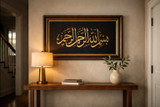
I hung up Arabic calligraphy because it looked nice, I didn't think much of it, until one day one of my kids stopped in the hallway and asked, "Mom, what does that say?" And just like that, we're talking about Ayat al-Kursi.
Your walls? They're teaching, whether you realize it or not. When kids see duas by the door, Qur'anic verses in beautiful frames, Allah's names in flowing script—it sinks in quietly. Even a simple dua poster from Madinah Mart can spark your child's curiosity about faith. They start connecting the dots: this matters to us. We live with these words. That awareness of Allah? It doesn't come from lectures. It comes from growing up surrounded by reminders that feel natural, not forced.
Clothing That Teaches Modesty and Identity
My daughter was four when she first asked if she could wear hijab like me. I didn't bring it up—she did. So we got her soft, pretty ones she could try on, play dress-up with, wear for prayer. Some days she wears it all morning. Some days it's off in five minutes. And that's completely okay.
Here's the thing: modest clothing for kids isn't about imposing rules. It's about helping them see themselves. When they have their own special prayer outfit or clothes they love that also happen to be modest, they're absorbing something quietly—who I am matters, and how I show up in the world reflects that. Plus, they get so excited about their "Jumu'ah outfit" or "masjid clothes." It just becomes part of who they are, naturally.
Mealtime & Ramadan Essentials
Ramadan used to stress me out. How do I make it special when I'm exhausted and fasting? Then we started small. A countdown calendar the kids could open each day. Some decorations we'd put up together. A simple halal cookbook where they could actually help make something.
Now? They ask when Ramadan's coming. My son still talks about the year we made crescent cookies together—his hands covered in flour, the kitchen a disaster, both of us laughing. That's what these little things do. They turn obligations into memories. When your kids associate Islamic occasions with warmth, togetherness, and joy—not just rules—that's when faith becomes something they love, not something they endure.
Teaching Faith by Living It – Islamic Parenting in Action
I'm going to be straight with you: your kids aren't learning Islam from your lectures. They're learning it from watching you when you're tired, frustrated, or think no one's looking. How you react when you're stuck in traffic. Whether you gossip. If you actually make time for Qur'an or just talk about it. In Islam parenting, the most powerful teaching tool isn't a fancy curriculum—it's just you, living what you believe. Honestly? That pressure used to terrify me. Now it just keeps me honest.
Building Trust and Emotional Connection
My daughter once told me she didn't want to pray because it felt boring. My first instinct? Panic. Correct her. Explain why that's wrong. But I took a breath and said, Tell me more about that. And she did. We talked. Really talked. No judgment, just listening.
That's when I learned: kids who feel safe will bring you their doubts, their confusions, their honest feelings about faith. But they'll only come to you if you've shown them it's okay. The Prophet ﷺ used to bend down, look children in the eyes, really hear them—that's active listening as an act of love and respect. And when I lose my patience and yell? I apologize. Out loud. "I shouldn't have raised my voice. I'm sorry." Islamic parenting means showing them that adults make mistakes too, and we fix them.
Balancing Discipline with Compassion
I'll be honest—I used to think being a good Muslim parent meant being strict. Rules, consequences, no nonsense. Then I realized I was raising obedient kids, not thoughtful ones.
Now when my son spills juice everywhere, he cleans it up. Not as punishment—just as a natural consequence. He learns responsibility without me shaming him. And when they push boundaries, I don't just say "because I said so." I explain the why. Age-appropriately, but honestly. "We don't lie because it breaks trust." "We pray because it connects us to Allah." Here's what saved my sanity: remembering that patience is worship. When I stay calm during their chaos, I'm not just managing behavior—I'm modeling what faith actually looks like under pressure. Parenting Islam means correcting with love, not crushing their spirit in the process.
Takeaway: Your relationship with your children is the bridge to their relationship with Allah.
Creating Sacred Spaces in Your Everyday Home
A friend came over last week and said, "Your house just feels... different. Calm." I hadn't really thought about it, but she was right. It's not that our home is fancy or perfectly decorated—it's that there's usually Qur'an playing somewhere. The smell of bakhoor lingering from the night before. A little prayer corner where my kids' tiny mat sits next to mine.
Here's what I've learned: kids absorb the atmosphere of home way more than we realize. What do they hear when they wake up? What do they see on the walls? When we say "Alhamdulillah" together over dinner, when Qur'an is just part of the background during breakfast, when the house smells like oud on special nights—they're soaking it all in. Islam stops being this separate "serious thing" and just becomes... home.
We keep it simple. A prayer corner they can actually reach. Qur'an before bed. Family dua at meals. A few thoughtful things from Madinah Mart—mats, art, nice scents—that make the space feel intentional.
"A home filled with the sound of Qur'an, kind words, and good manners is the truest reflection of Islamic parenting."
That's what we're building here. Not perfection. Just peace.
Common Challenges in Islamic Parenting (and How to Overcome Them)
Some days I feel like I'm totally nailing this parenting thing. Other days? I'm lying in bed wondering if my kids will even remember to pray when they grow up. Islamic parenting is hard. Like, really hard. And I think we need to stop pretending it's all smooth and beautiful, because it's not. But here's what I've learned: the struggles don't mean you're failing. They just mean you're human. And there are ways through them that actually work.
Balancing Modern Life with Faith-Based Values
My daughter came home from school last month and asked why she's the only one who can't go to mixed sleepovers. My son wants to know why his friends get to do things we say no to. And honestly? Those conversations break my heart a little because I remember feeling the same way growing up.
Here's what's helped: I let them vent. I don't immediately jump into "this is haram" mode. I listen. Then we talk about the why—not just rules, but reasons. "We protect what matters." At home, we work hard to make their Muslim identity something they're proud of, not something they hide. And connecting with other Muslim families? Game changer. When they see other kids making the same choices, suddenly they don't feel so weird or alone.
Keeping Kids Engaged Spiritually in a Digital Age
Can I just say—screens are winning in my house more than I'd like to admit. My son would pick YouTube over Qur'an every single time. And I get it. One takes zero effort and gives instant dopamine. The other requires focus and patience.
So we're not banning screens—that felt like a losing battle. Instead, we're trying to be smarter about it. Islamic apps, Qur'an games, animated stories of the Prophets—we use those. We got a tablet with filters and only Islamic content for certain times. But more than anything, we created tech-free spaces: dinner table is phone-free, bedtime means no screens. And I had to look at myself too—if I'm on my phone while telling them to go pray, what am I really teaching? Islamic parenting means I have to live the balance I'm asking of them. Some evenings we all just... sit together. No devices. Those are the nights they actually open up and talk.
Final words,
Hey, listen—if you just read all this and now you're thinking "there's no way I can do all of that," take a breath. You're not supposed to do it all. Islamic parenting isn't some checklist you have to nail perfectly. It's just... trying. Showing up. Doing your best on the good days and the terrible ones.
Those little things—whispering Bismillah before a meal, one bedtime dua, not losing it when they spill juice everywhere—they're enough. Really. Pick one thing. Just one. Start there. The rest will come.
And those moments when you lie awake wondering if you're completely screwing this up? Allah sees that worry. He sees you trying. In parenting Islam, that's what counts. Your heart. Your effort.
If you want some help along the way, Madinah Mart has simple things, prayer mats, storybooks that just make life a little easier.
You're raising good humans. Future Muslims who'll carry this forward. And honestly? You're doing better than you think.
I mean it.
Finally, don't hesitate to send us a message asking about something or even share a parenting story with us!
Frequently Asked Questions About Islamic Parenting
How do I teach my child about Islam in a non-Muslim country?
Start at home with simple daily habits: morning duas, Bismillah before meals, Prophet stories at bedtime. Let them see you pray. Kids learn from what you do.
Connect with your local Muslim community. Attend Jumu'ah together, celebrate Eid with other families. When they see other Muslim kids, they don't feel alone.
Be open to questions. Explain the why with love. Islamic parenting builds their identity strong at home.
What are the best Islamic parenting tips for raising kids in America?
Make faith natural, not forced. Weave Islam into daily life through duas in the car and Qur'an at breakfast.
Be the example. Your kids watch how you treat people and handle frustration.
Build community by connecting with other Muslim families. Teach them why behind Islamic rules so they own their choices.
Start small, one habit at a time. Islamic parenting is consistency, not perfection.
How can I balance Islamic values with modern American culture for my children?
Teach the why, not just the what. Help them understand Islamic boundaries protect, not restrict.
At home, make being Muslim joyful. Celebrate Islamic occasions with excitement.
Model balance by being faithful and engaged in American life. Connect with diverse Muslim families. Parenting Islam means living with purpose wherever you are, not isolation.
At what age should I start teaching my child about prayer and Quran?
Start early but gently. From toddlerhood, let them watch you pray. Get them a little mat.
Around 4 to 5, teach prayer playfully. By 7, encourage regular prayer.
For Qur'an: let babies hear it. Around 3 to 4, teach Arabic through play. By 5 to 6, memorize short surahs together.
Islamic parenting tip: make worship joyful before it becomes obligation.
How do I handle my child's questions about why we're different from their friends?
First, validate their feelings. "I know it's hard feeling different. That's okay."
Explain why, not just "it's haram," but the deeper reason. "We dress modestly because our bodies are precious."
Make being Muslim something they're proud of. Connect them with other Muslim kids.
In parenting Islam, different isn't bad. It's beautiful.


Recent Posts
-

-

Islamic Prayer Scarves & Hijabs: A Real Buying Guide
Feb 24th 2026 -