
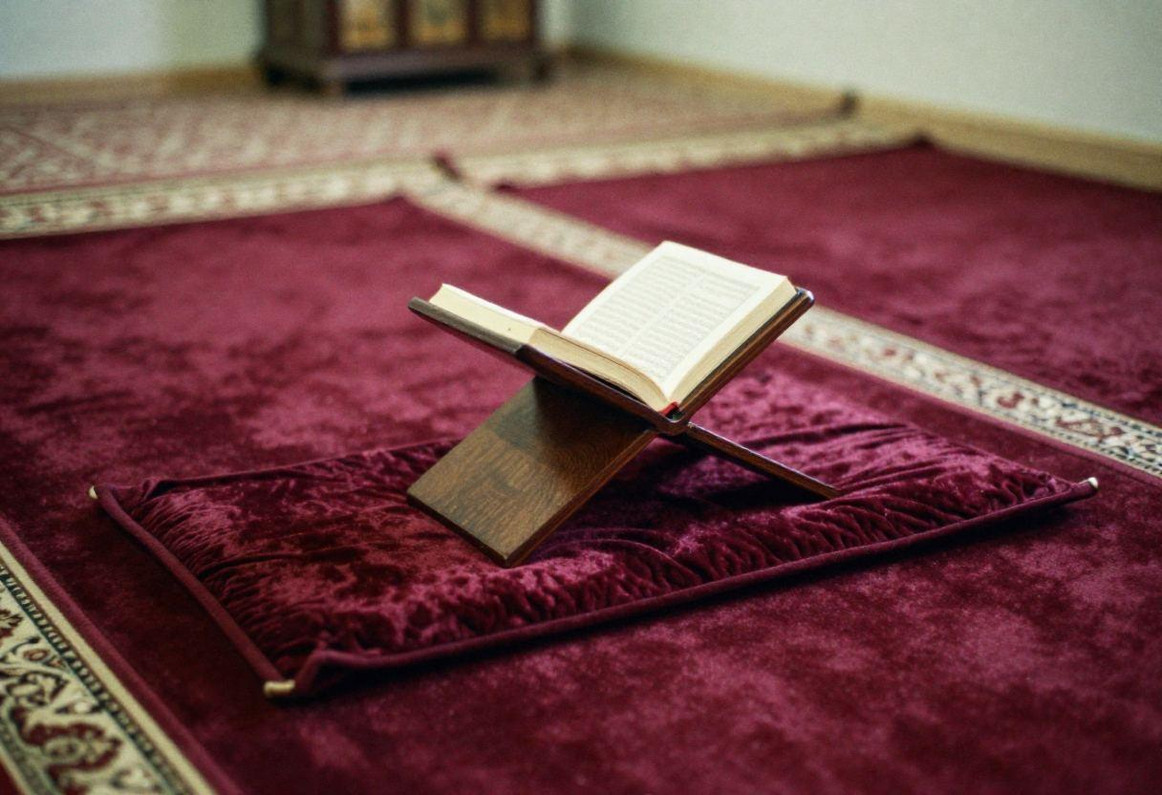
How to Choose the Best Back-Supportive Prayer Mat?
Last Ramadan, I watched my grandmother try three times to get up after sujood. Every time she would set her hands down on the ground, press slightly, and then gently go back down. My aunt was the one who eventually supported her to get up, and it was obvious to me that it upset her a lot. She has been praying on that very narrow mat for almost two decades.
That moment really stayed with me. The thing is, it's not only about her, right? Even my knees are making strange clicking sounds when I sit for tashahhud. My friend Amina keeps shifting her weight during prayer because the hard floor bothers her back. We all just push through it like it's normal.
But why should prayer leave us sore? The whole point is to feel closer to Allah, not to grit your teeth through the physical part. A proper prayer mat won't fix everything, but it helps. And I mean, it really helps, not in some advertising way.
If you're reading this, you're probably either dealing with this yourself or you've got someone in mind. Maybe your parents. Maybe you're thinking ahead to Ramadan gifts and want to give something that actually means something.
I'm going to walk you through this whole prayer mat thing. What makes one better than another, which types exist, and how to figure out what you actually need. No complicated terms, no nonsense. Just what you need to know to make a good choice.
Why Back Support Matters During Salah
Think about what your body actually goes through during prayer. You're standing, then bending down for ruku', dropping to your knees for sujood, sitting back for tashahhud, then doing it all over again. And that's just one rak'ah. Multiply that by five prayers a day, every single day, for years. Your knees and back are doing a lot of work.
Sujood is especially tough on the body. All your weight goes onto your knees, your forehead touches the ground, and your spine has to support that position. Do that on a thin mat over a hard floor? Your joints feel it. And when Ramadan comes around with those long Taraweeh and Qiyam prayers, everything you've been ignoring suddenly demands your attention.
Here's what I love about Islam, though. "Allah intends ease for you, not hardship" (2:185). There's even a hadith that says, "There is a remedy for every malady." (Sahih Muslim 2204) We're supposed to take care of ourselves. Our bodies are an amanah, a trust from Allah. Looking after them isn't being soft or indulgent. It's actually part of being a good Muslim.
So who really needs extra support? In fact, many people. The people who raised you or the people who are older than you might be having arthritis. There must be a person who is getting better from a knee injury. Any person with long-lasting back pain who is afraid of going down to the floor. People who lead long prayers. Even new Muslims who aren't used to these movements yet and wake up sore the next day.
A cushioned prayer mat from Madinah Mart's collection isn't about making prayer fancy. It's about making it sustainable. As the main objective is to pray comfortably and consistently, not to endure a hard time until you can't take it anymore.
Then what signs should you really consider when buying a support prayer mat? Let's dissect it.
Key Features to Look for in a Back-Supportive Prayer Mat
Alright, let's discuss what actually features a prayer mat as supportive. As a result, it is not necessary that all thick mats would be the same, and sometimes the most luxurious-looking one is not what you require.
Thickness Matters (But Not the Way You Think)
Most standard prayer mats are around 3–5mm thick. It's better than praying directly on tile, but that's about it. Step up to 8-15mm, and you're getting real cushioning that your knees will notice. Go past 15mm, and you're in orthopedic territory, the kind of support someone with serious joint issues needs.
But here's the catch: thicker isn't automatically better. I've tried mats so thick I felt wobbly during ruku'. You need that sweet spot where there's enough cushioning, but you still feel stable and grounded.
What's Inside Makes the Difference
Memory foam is the good stuff if you've got joint pain. It fits perfectly to your knees and forehead, thus allowing the pressure to be shared with the rest of the surface, rather than being concentrated in one spot.
High-density foam is the reliable middle ground. It doesn't sink in as much as memory foam, but it holds up better over time. You won't find yourself with permanent knee dents after six months of use.
That comfort that you usually get from a normal yoga mat can be achieved through cotton or polyester that has been padded with some kind of fiber; these fibers add some extra cushioning. The biggest advantages of these materials are that they are easier to wash, they breathe better in hot weather, and they dry faster. They provide less support than a foam mat, but certainly, this type of mat is more suitable for some people.
The Stuff People Forget About
Check the bottom of the mat. If it doesn't have a non-slip backing, you'll be adjusting it constantly during prayer. Trust me, sliding forward during sujood gets old fast.
The upper side has to be tender to the point that it is not painful to your forehead, but still should have some texture so that the hands don't slip. There are people who like it smooth and others who take a little grip. There is no right or wrong here, just a matter of personal preference.
Size Actually Matters
Mostly mats come in the size of about 110cm by 70cm, and it's quite okay for people of average height. But if you are tall or you are a person who likes to spread out when you do sujood, then don't force yourself to use a mat that is too small. You will probably have your feet or hands sticking out of the mat, which is the opposite of what you intended to do.
Will It Last?
Look for mats you can actually clean. Some have covers you can take off and throw in the washing machine, which is brilliant. Others you have to spot clean, which is fine, but more annoying.
Check the edges too. Cheap mats start fraying after a few months. Reinforced edges and decent stitching mean you're not shopping for a replacement by next Ramadan.
In case you want a product that satisfies these requirements, Madinah Mart's collection offers some choices with cushioning that are capable of regular usage.
It's important to know what features matter most before we move on to examining various types of prayer mats and deciding which one is suitable for your case.
Types of Prayer Mats: Finding Your Perfect Match
Now that you know what to look for, let's break down the actual types of mats out there. Because what works for your grandmother probably isn't what works for your college-aged nephew.
Standard Supportive Mats
This is your everyday workhorse. More padding than a basic mat, good materials that last, nothing too fancy. Maybe this is your answer if you mostly pray at home and want something comfortable without thinking too much about it. It is in your prayer corner, works as usual, and doesn't occupy a lot of space.
Orthopedic Prayer Mats
These are built specifically for people dealing with real joint issues. It's basically super-thick padding, very often memory foam, that is made to give your knees and back the right kind of support. One of my neighbors' moms has pretty bad arthritis, and the change to an orthopedic mat was the reason she could continue her praying routine on her own. That's not a small thing. For many people with joint pain, an orthopedic mat feels less like a luxury and more like a necessity.
Travel Prayer Mats
For anyone who prays outside the house regularly. Students between classes, people praying at work, and frequent flyers. These fold up small, weigh almost nothing, and usually come with a little carrying case. Yes, they're thinner than home mats, but the good ones still offer decent cushioning. And honestly, for Umrah or Hajj, when you're already carrying a million things? A compact travel prayer mat is a lifesaver.
Perfect for tossing in your car, your office drawer, or your carry-on.
The Best of Both Worlds
Some newer designs manage to be both supportive and portable. Foldable mats with memory foam that compress down when you pack them. Lightweight materials that still give you proper cushioning. In the end, it is really dependent on your daily routine and physical condition whether you want a luxurious item for home, such as the pieces in Madinah Mart's collection, or a small folding travel prayer mat that is still comfortable.
So how do you actually decide which one's right for you? Let's figure that out.
How Do I Choose the Right Prayer Mat?
Alright, so you are checking out 12 different mats on the internet, and they all seem to be pretty much identical. This is the way to really reduce your options.
Start With What Your Body's Telling You
If your knees or back hurt during prayer, don't mess around with the thin stuff. If you have joint pain, something around 10mm or more will usually feel noticeably better, and I really suggest that you opt for memory foam or an orthopedic mattress. Sure, they are more expensive, but why would you save 20 dollars only to be in pain?
For older people or those recovering from injury, many find 12–15mm or more comfortable. And make sure it has a non-slip backing because the last thing someone with balance issues needs is a mat sliding around. Would you also consider cleaning while buying it? In case leaning down to clean a mat is hard for you, then a mat with a removable, washable cover is what you should get.
If you're young and healthy with no issues? An 8-10mm supportive mat works perfectly fine. Put your money into something durable that will still be good for years instead of the cheapest that you can find.
Think About Where You Actually Pray
Praying only at home? Get the comfortable one. The thick one. The one that makes you look forward to prayer time instead of dreading it. Weight doesn't matter, portability doesn't matter. Comfort matters.
Always on the move? Then you need a travel prayer mat that actually folds up and fits in your bag. Check if it comes with a carrying case because shoving a mat loose into your backpack gets messy. You won't get the same cushioning as a home mat, but a decent travel one still beats praying on random floors.
Students and office workers need something in between. Compact enough to keep in a desk drawer or locker, quick to dry if you need to do wudu at a sink, and honestly, neutral colors help if you're praying in shared spaces.
What Can You Actually Spend?
Look, if fifteen to thirty bucks is your budget, that's fine. You can get basic supportive padding that's way better than nothing. Good for testing if you even like thicker mats.
Thirty to sixty dollars gets you into proper quality territory. Memory foam, high-density padding, materials that last. This is the range most people should aim for if they pray daily.
Sixty dollars and up? That's orthopedic-grade stuff. Maximum comfort, built to last forever. If you've got chronic pain or you're buying for someone who does, this is where you spend.
Try Before You Buy (If You Can)
If you're shopping in person, press down on the mat hard. Does it bounce back? Does it feel stable or mushy? Run your hand over the surface. Some textures feel great, others are weirdly scratchy.
Shopping online? Read the reviews, especially from people who mention the same issues you have. Someone saying "great for my bad knees" is more useful than ten people saying "nice mat."
Still overwhelmed? Check Madinah Mart's collection for solid options that actually match your situation instead of scrolling through everything.
Now, if you're shopping for someone else, especially for Ramadan, let me tell you why a supportive prayer mat might be the best gift you give this year.
Why Back-Supportive Prayer Mats Make Perfect Ramadan Gifts
Alright, real talk about Ramadan gifts. How many decorative lanterns can one person own? And we all know those fancy date boxes usually sit half-eaten in the back of someone's cupboard.
But a prayer mat? That's something different. Because Ramadan isn't just about exchanging stuff, it's about actually caring for the people in your life. And what better way to show you care than giving something that makes their daily prayers easier?
Imagine it. They will use it five times a day, every single day. It's definitely not a present that gets thrown in a closet after Eid.
Who'll Actually Love Getting These prayer mats?
Your mom or dad. Maybe your grandparents. They'd never buy themselves a fancy mat. They're still using that thin one from 1995 that's basically just fabric at this point. But get them something with real cushioning? Something that doesn't make their knees scream? It is possible that they do not express it in words; however, the change will be evident. Also, each time they will put up a prayer, they will sense that you observed, that you loved enough to take action.
Someone who just converted. They're trying to figure everything out, the positions feel weird, their body aren't used to it yet. A proper supportive mat takes one difficulty off the table. Plus, it's a way of saying "hey, we're happy you're part of this" without making a big speech about it.
Your kid who is away at university. They're praying in dorm rooms, libraries, wherever they can find space. A travel prayer mat that actually fits in their backpack? They'll use it. Makes it possible to pray between classes without it being a whole production. Way more useful than another care package of snacks.
Your aunt, who is planning Umrah. Or your brother who is going for Hajj. In simple terms, a fold-up travel mat is the answer. No one wants to carry 10 pounds of added luggage, so give them a decent traveling mat, and I assure you, they will be thankful every time they take it out of their bag.
That cousin with the bad back. Or your friend who is recovering from knee surgery. They're struggling, but they won't complain. A thick, supportive mat isn't just nice, it's actually helpful. It says "I see what you're dealing with" without making them feel like a burden.
Here's Why It Matters
When you give someone a prayer mat that actually works for them, you're not just giving them a thing. You're making their worship easier. You're removing one small obstacle between them and their prayers. That matters.
It's practical love. It's the kind of gift that shows you actually thought about what someone needs, not just what looked good on a store shelf.
So this Ramadan, skip the generic stuff. Check out Madinah Mart's collection, where you can actually find mats for different situations. Get your dad the padded one. Get your sister the travel version. Match the gift to the person, not the other way around.
That's a gift people remember.
Conclusion
Look, we've covered a lot here. Why cushioning actually matters when you're praying multiple times a day. What features separate a decent mat from one that'll have you wincing by the third sujood? There are different types out there, from thick orthopedic ones to those compact travel versions that fit in your bag.
Bottom line? Choosing the right prayer mat is not a matter of indulging in something luxurious. It is a matter of making it more convenient to pray regularly and in comfort. That's all. When your knees don't ache, and your back is not uncomfortable, you can actually concentrate on your prayer rather than making a mental count of how much time is left.
Ramadan's coming up, and honestly, it's the perfect time to sort this out. Whether you're finally upgrading that threadbare mat you've been using for years, or you're looking for a gift that'll actually mean something to someone you care about, a supportive prayer mat does both. It's not just for Ramadan either. This is something that supports someone's worship throughout the year.
Taking care of your body while you worship? That's not being soft. That's being smart. Islam is centered around balance, and simply by doing such a minor change, your whole prayer session can be amazingly uplifted.
Therefore, if you require a product for your own use or are purchasing a gift for someone, have a glance at the products available. There is a great variety of comfortable mats, portable options, and orthopedic designs for those in need of real comfort at Madinah Mart. Find something that works, and make prayer easier on yourself or someone you love.
Your knees will thank you. Read more here
FAQs
How thick should a prayer mat be for back support?
Depends on what you're dealing with. If you just want something more comfortable than what you've got now, 8-10mm does the job. You'll notice the difference without it feeling weird.
But if you've got real joint pain, or you're buying for someone elderly, go thicker. 12-15mm or more. That's where you get actual support that makes a difference.
Just don't go crazy thick thinking more is always better. You want cushioning, not a mattress. There's a balance.
Are thick prayer mats suitable for travel?
The really thick ones? Not really. They're bulky and heavy, which defeats the whole point of a travel mat.
But here's the thing: some travel prayer mats use memory foam that compresses down when you fold them. They're surprisingly cushioned when you lay them out, but pack up small. Those are your best bet if you travel a lot but still want comfort.
Honestly, though, most people should just have two mats. A thick, comfortable one at home, and a lighter travel one for everything else. Trying to make one mat do both jobs usually means compromising on both.
How do I clean and maintain a supportive prayer mat?
First, check what the manufacturer says. Some mats have covers you can unzip and throw in the washing machine, which is brilliant.
If yours doesn't, then a gentle cleaning of the stains with soap and water is good enough. Please abide by the rule of not soaking it, and also do not use harsh cleaners because, over time, they will disintegrate the foam.
Most important: let it air dry completely. Like, fully dry. Damp foam gets moldy and smells awful.
Will a thick mat affect my prayer posture?
Not if it's a decent one. Good supportive mats actually help your posture because your joints aren't screaming at you to shift position. Essentially, the focus must be on getting a mat with a firm backing, rather than just a soft and mushy one. Though some cushioning is needed, it should still be comfortable to be stable and grounded. If you are going too deep or unsteady, it is a bad mat, not a problem with the thickness of the mat.
What's the difference between a regular mat and an orthopedic prayer mat?
Regular mats are mostly about looking nice. Maybe a bit of padding, but nothing special. They're fine if you don't have any issues.
Orthopedic mats are engineered differently. They use memory foam or high-density materials designed to better support your joints and reduce pressure compared to regular thin mats. They're built for people who actually need help with pain or mobility, not just decoration.
For someone struggling physically with prayer, an orthopedic mat can be a huge help.
If you have serious or ongoing pain, it’s always a good idea to ask a doctor or physiotherapist for advice on what kind of support is best for you.


Recent Posts
-

Ramadan Home Decorating Ideas from Madinah Mart
Jan 27th 2026 -
Top Affordable Islamic Home Decor
Jan 15th 2026 -

Ramadan Decorations at Home
Dec 31st 2025